
How Fathers Pass Down Pain (And How to Break the Cycle)
Your father's silences echo in your throat. The question isn't if you inherited his brokenness—it's what you'll do about it. How to break the cycle.
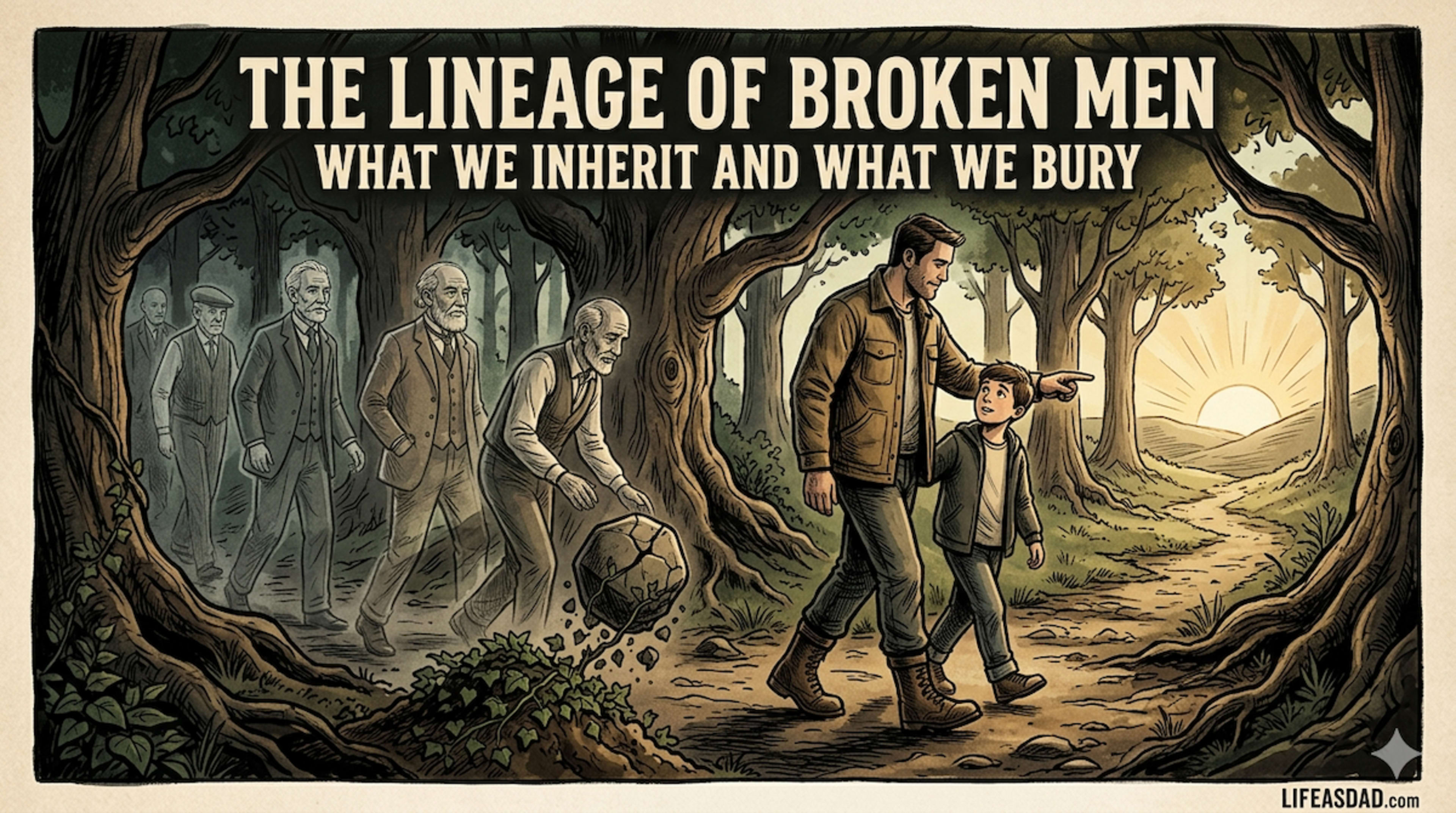
I didn't know my father's father. But I inherited his rage.
I didn't know the man who fathered my father. But I felt his abandonment echo through my childhood like a ghost in the walls—present in his absence, violent in his silence. And I swore I'd be different. I swore I'd break the cycle.
Then I found myself yelling at my seven-year-old over toast. This is the first manifestation of inherited patterns—the moment you realize you're repeating what you swore to escape. It's the unspoken rage that we all carry, the hidden anger that seems to come from nowhere but actually comes from everywhere.
The Inheritance Nobody Wants
There's a lineage that runs through men's bodies. It's not written in DNA, though it can feel like it is. It's written in how your father held tension in his shoulders. In the way he drank. In his silences. In the violence he called discipline and the coldness he called strength.
You inherit not just patterns, but permission. Your father's emotional absence gives you permission to be emotionally absent. His avoidance gives you a blueprint for avoidance. His rage gives your rage legitimacy. It feels like nature, but it's only history.
The terrifying part? You don't even know you're doing it until you hear your voice in your child's nightmare.
The Ghost You Didn't Know You Were Carrying
This isn't poetry. This is neurobiology. Traumatized bodies create traumatized responses. Your nervous system was tuned by your father's nervous system. If he was dysregulated, you learned dysregulation. If he abandoned, you learned abandonment patterns. You're not bad for carrying these. You're human.
But here's where most men get stuck: They believe inheritance is destiny. They think because their father was cold, they are destined to be cold. Because he drank, they will drink. Because he left, they will leave.
This is where the spiritual gets practical. This is where you don't just think differently—you rewire your body.
Interrupting the Transmission
Breaking a generational pattern isn't about willpower. It's about interruption.
Your father taught you a language of silence. You need to learn a new language. Not from a book. Not from a podcast. From practicing until your nervous system recognizes safety in vulnerability. This is core to developing emotional intelligence for men—learning to recognize your patterns and interrupt them. Until the old patterns feel foreign.
I had to learn rage doesn't keep you safe. It isolates you. I had to learn that crying in front of my kids doesn't make me weak—it teaches them that men have the full spectrum of humanity. I had to unschool the doctrine that love is conditional, that vulnerability is weakness, that a man's value is his production.
This takes time. This is generational work. But here's what I know: You can break the lineage. Not by pretending the inheritance doesn't exist. But by acknowledging it, understanding it, and choosing something different.
What You Leave Behind Is Your Choice
The question isn't: "Am I broken like my father?" The question is: "What am I going to do with the brokenness I inherited?"
Your children are watching. They're not watching your productivity or your title or how much you accomplish. They're watching how you're present with them, how you handle failure, how you respond to being told no. They're learning a new lineage from you—one that says: "The cycle ends here. With me. This is where we choose differently."
Your legacy isn't what you inherit. It's what you interrupt.
Newsletter
Stories for dads who keep going.
No fluff. No perfect parenting advice. Real words, every week, for fathers who are showing up even when it's hard.
Related Articles
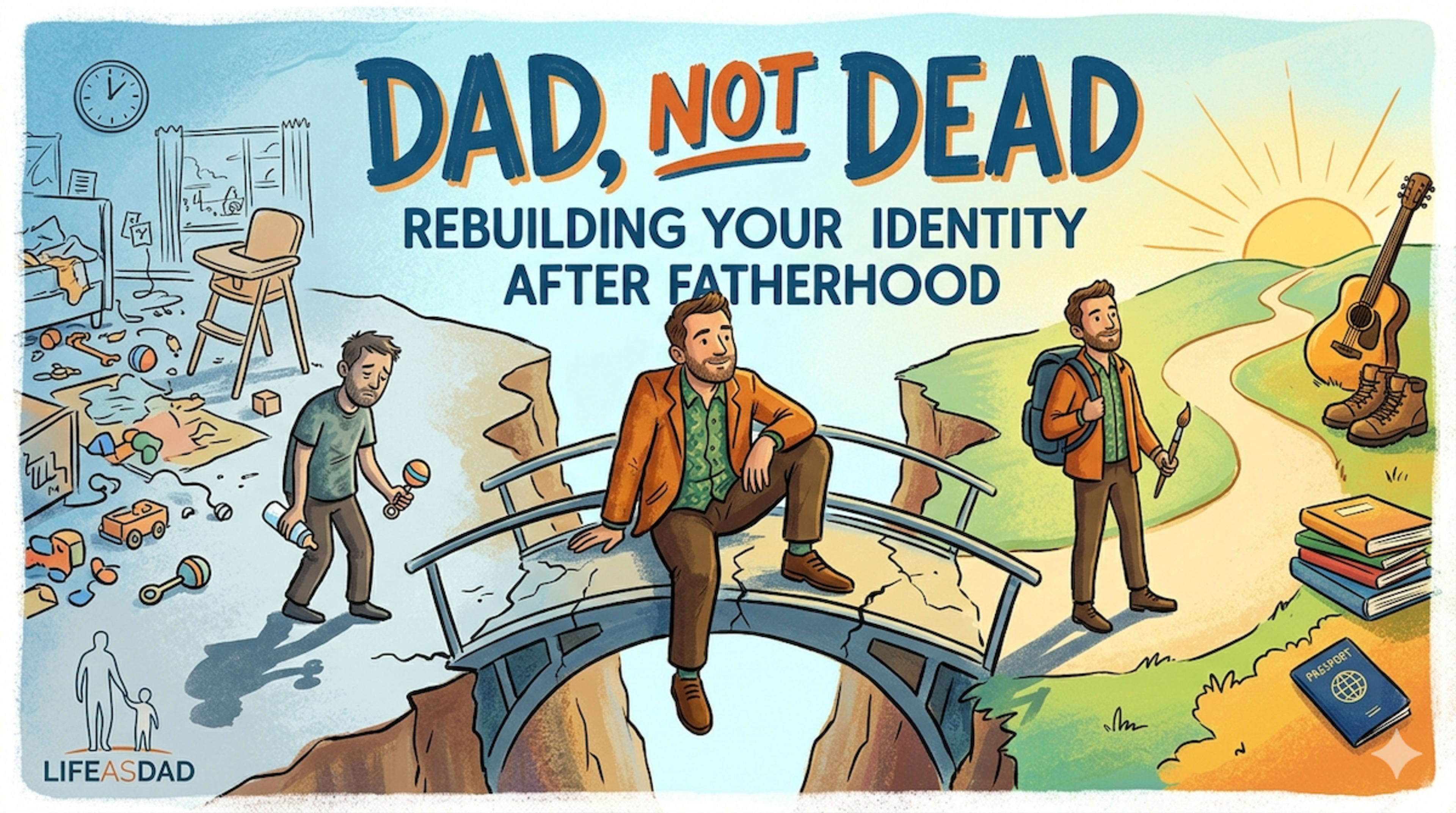
I didn’t die when I became a dad. But something in me went quiet. --- What “Dad, Not Dead” Means It means I’m still here. Even if I don’t always feel like

Something feels off in modern fatherhood. Not broken. Just… unanchored. --- What Changed in the Last 20 Years Fathers used to be defined by role. Now they
Something shifted in men. Quietly. And no one really named it properly. --- What Happened to Masculinity It used to be defined externally. Now it’s undefi